 Delighted and honoured to have been able to contribute as a co-autor to this paper, which presents the
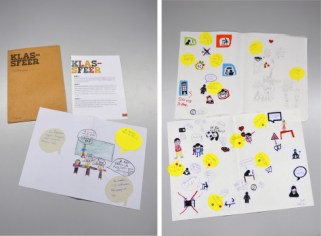
Collaborative Design Thinking (CoDeT) co-design approach, its theoretical framework, and its application in a case study with 49 children aged 9 to 10 in two schools.
CoDeT can be applied in co-design settings characterized by high child-to-adult ratios (ca.1 adult for 15 to 20 children), such as schools, museums and maker spaces. In these settings, children have to work relatively independent from adults who become guides on the side. This can be challenging due to children’s limited understanding of the design process and their lack of skills to collaborate productively towards a shared design goal. CoDeT addresses these challenges by integrating principles of Social Interdependence Theory (SIT) and Design Thinking (DT), which together form the theoretical backbone of the approach. CoDeT was first applied in a case study and yielded promising results in terms of children’s collaboration and design thinking skills, yet possible improvements were found. The insights of this case study informed the revised version of CoDeT presented at the end of the article, in a what-why-how structure, allowing researchers and practitioners to apply the co-design approach in a wide variety of contexts characterised by high child-to-adult ratios.
 You can find the article here (full text free accessible and downloadable for 50 days).
CoDeT outcomes can be interpreted with the GLID method; a multimodal approach for integrating verbal, material and other co-design outcomes in a structured and coherent analysis. For more information, see the IJHCS article “The GLID method: Moving from design features to underlying values in co-design”.
With Maarten Van Mechelen, Bieke Zamman, Bert Willems and Vero Vanden Abeele.
Tags: Co-design, CoDeT, design thinking, Education, GLID Method, research



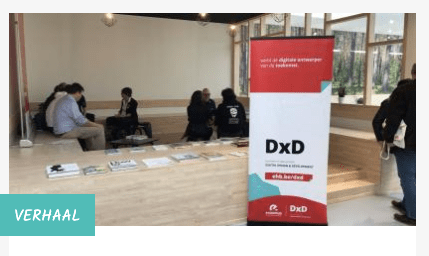 In 2017 I had the pleasure to work with the great team of the Erasmus Hogeschool (EhB) – Department of Design and Technology – in Brussels on a new curriculum called
